
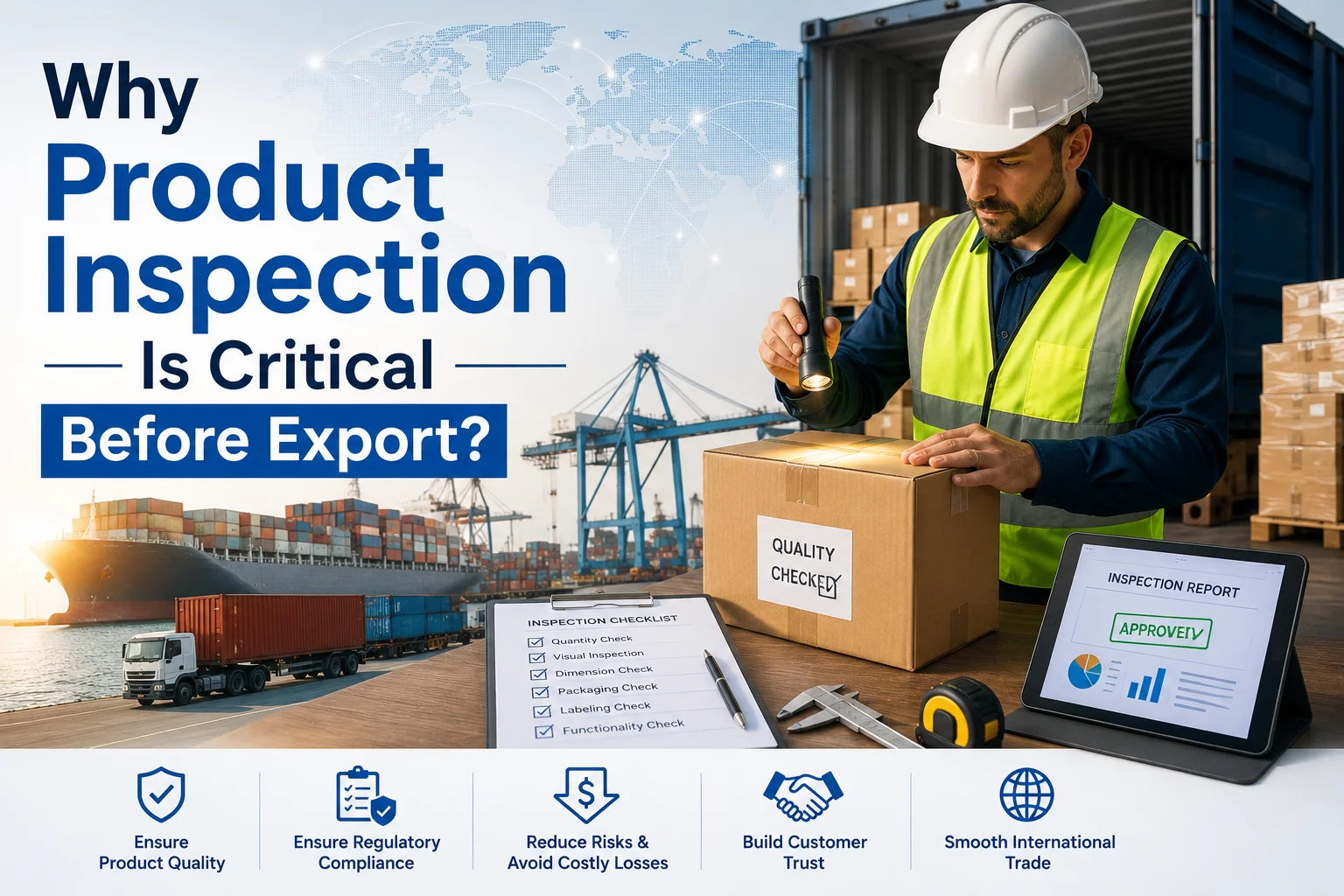
Exporting products in today’s competitive global market involves far more than simply manufacturing goods and shipping them overseas. Businesses must meet strict quality standards, comply with country-specific regulations, and ensure that their products align with customer expectations in international markets. A single oversight—such as a defect, labeling error, or regulatory non-compliance—can lead to shipment rejection, financial losses, or even long-term damage to a company’s reputation.
This is why product inspection before export plays a crucial role in international trade. It acts as a final checkpoint that verifies whether products meet agreed specifications, quality benchmarks, and regulatory requirements before they leave the country of origin.
For exporters targeting regions like Saudi Arabia, Qatar, and Egypt, where compliance requirements are strict and enforcement is rigorous, product inspection is not just a quality step—it is a strategic necessity.
What Is Product Inspection Before Export?
Product inspection before export is a structured quality assurance process where finished goods are examined and evaluated prior to shipment. The goal is to confirm that the products meet the specifications agreed upon between the buyer and supplier, including quality, quantity, packaging, labeling, and compliance requirements.
This process is typically conducted by independent third-party inspection agencies. Using third-party inspectors ensures objectivity and reduces the risk of biased reporting, which is especially important in international transactions where trust and transparency are critical.
Key Types of Inspection
Pre-production inspection involves assessing raw materials, components, and production readiness before manufacturing begins. This step ensures that the correct materials are being used and that the factory is capable of meeting production requirements. Identifying issues at this stage helps prevent costly mistakes later in the process.
During production inspection takes place when a certain percentage of goods has been manufactured. This allows inspectors to detect defects or inconsistencies early, enabling manufacturers to correct issues before the entire batch is completed.
Pre-shipment inspection (PSI) is the most critical stage. It occurs when production is nearly complete, and goods are ready for shipment. Inspectors evaluate finished products against quality standards, check packaging and labeling, and verify quantities.
Container loading inspection ensures that products are properly packed and securely loaded into containers. This step minimizes the risk of damage during transit and ensures that the correct items are shipped.
Why Product Inspection Is Critical Before Export?
Ensures Product Quality
Product inspection serves as a final quality assurance checkpoint before goods are shipped internationally. Inspectors carefully examine products for defects such as incorrect dimensions, poor finishing, functional issues, or deviations from specifications.
Without this step, defective products may reach customers, leading to dissatisfaction and complaints. In international trade, where returning goods is expensive and time-consuming, ensuring quality before shipment is far more efficient than dealing with issues afterward.
Moreover, inspection helps maintain consistency across batches. For businesses exporting large volumes, even small inconsistencies can affect brand perception and customer trust. By identifying defects early, companies can ensure that only high-quality products reach the market.
Prevents Financial Loss
Exporting goods involves significant costs, including manufacturing, packaging, shipping, customs duties, and logistics. If products fail to meet quality or compliance standards, the financial consequences can be severe.
For example, rejected shipments may need to be returned or destroyed, leading to additional transportation and disposal costs. In some cases, businesses may also face penalties or lose contracts with international buyers.
Product inspection minimizes these risks by identifying issues before shipment. Fixing problems at the factory stage is far less expensive than addressing them after the goods have been exported. In this way, inspection acts as a cost-saving mechanism rather than an additional expense.
Ensures Compliance with International Regulations
Every country has its own set of regulations governing imported products. These regulations cover safety, labeling, environmental standards, and product performance.
For instance, exporting to Saudi Arabia often requires compliance with SASO SABER Certification, while electrical products may need SASO IECEE Recognition. Similarly, exports to Egypt may require an Egypt Certificate of Inspection.
Product inspection ensures that goods meet these requirements before they reach customs. This reduces the risk of delays, fines, or rejection at the destination port. It also helps businesses maintain a smooth export process and build trust with regulatory authorities.
Protects Brand Reputation
In international markets, brand reputation is one of the most valuable assets a business can have. Delivering defective or non-compliant products can quickly damage a company’s credibility and result in loss of customers.
Inspection helps protect brand reputation by ensuring that only products meeting quality standards are shipped. This consistency builds customer confidence and strengthens long-term business relationships.
In competitive markets, where buyers have multiple options, maintaining a strong reputation can be the difference between retaining clients and losing them to competitors. Product inspection plays a key role in safeguarding this reputation.
Reduces Supply Chain Risks
Global supply chains often involve multiple stakeholders, including suppliers, manufacturers, logistics providers, and distributors. Each stage introduces potential risks, such as delays, miscommunication, or quality issues.
Product inspection helps mitigate these risks by providing visibility into the production process and identifying problems early. For example, if defects are detected during production, corrective actions can be taken before the entire batch is completed.
This proactive approach reduces disruptions, ensures timely delivery, and improves overall supply chain efficiency. It also allows businesses to maintain better control over their operations, even when dealing with overseas suppliers.
Types of Product Inspection Services
Different types of inspection services address specific stages of the production and export process.
Pre-production inspection focuses on verifying raw materials and production readiness. This ensures that the manufacturing process starts with the correct inputs and reduces the likelihood of defects later.
During production inspection provides ongoing quality monitoring. By checking products while they are being manufactured, inspectors can identify trends and prevent widespread defects.
Pre-shipment inspection acts as the final approval stage. It confirms that finished goods meet all requirements before shipment, making it the most critical inspection type.
Container loading inspection ensures that products are handled properly during loading. This step verifies packaging integrity and prevents damage during transportation.
Each type of inspection serves a unique purpose, and using them together provides comprehensive quality assurance.
Product Inspection Process (Step-by-Step)
The product inspection process follows a structured approach to ensure accuracy and reliability.
The first step is booking the inspection, where the exporter schedules a visit with a third-party agency. This includes providing product specifications, inspection criteria, and timelines.
Next, inspectors conduct sampling based on internationally accepted standards. Random sampling ensures that the inspection results represent the entire batch.
During testing and verification, inspectors examine products for quality, functionality, and compliance. This may include visual checks, measurements, and performance testing.
After the inspection, a detailed report is generated. This report outlines findings, highlights defects, and provides recommendations.
Finally, the shipment is either approved or rejected based on the inspection results. If issues are identified, corrective actions must be taken before export.
Industries That Require Product Inspection
Product inspection is essential across various industries due to the need for quality assurance and regulatory compliance.
In the electronics industry, inspection ensures that products meet safety standards and function correctly. This is critical for preventing hazards and ensuring customer safety.
In the food industry, inspection verifies hygiene, safety, and compliance with regulations set by authorities such as the Qatar Ministry of Public Health. This helps prevent health risks and ensures product quality.
Construction materials require inspection to ensure durability, safety, and compliance with project specifications. Defective materials can lead to structural issues and significant liabilities.
Consumer goods also benefit from inspection, as it ensures consistency and quality, which are essential for customer satisfaction and brand loyalty.
Common Problems Without Product Inspection
Skipping product inspection can lead to serious consequences that affect both operations and reputation.
Shipments may be rejected at destination ports due to non-compliance or quality issues, causing delays and additional costs. Businesses may also face legal penalties or fines for failing to meet regulatory requirements.
Product recalls can occur if defective goods reach the market, resulting in financial losses and reputational damage. Additionally, dissatisfied customers may terminate contracts or switch to competitors.
These risks highlight the importance of inspection as a preventive measure rather than a reactive solution.
Product Inspection vs Quality Control
While product inspection and quality control are related, they serve different purposes within the production process.
| Feature | Product Inspection | Quality Control |
|---|---|---|
| Timing | Conducted before shipment | Conducted throughout production |
| Purpose | Final verification of products | Continuous monitoring of processes |
| Scope | Focuses on sampled products | Covers entire production system |
| Objective | Approve or reject shipment | Improve overall quality |
Quality control ensures that processes are followed correctly during production, while product inspection provides a final check before export. Using both approaches together ensures comprehensive quality assurance.
How to Choose the Right Inspection Service?
Selecting the right inspection service provider is critical for obtaining reliable results.
Experience and industry expertise are important factors. A provider with knowledge of your specific industry will better understand the standards and requirements involved.
Certification and accreditation ensure that the inspection company follows internationally recognized practices. This adds credibility to the inspection results.
Transparency is also essential. Detailed reports with clear findings help businesses make informed decisions.
Finally, local and regional knowledge is crucial for exporters targeting GCC markets. Understanding regulations and compliance requirements in countries like Saudi Arabia, Qatar, and Egypt ensures smoother export processes.
Why Professional Inspection Services Matter in UAE?
The UAE is a major hub for international trade, connecting businesses to markets across the Middle East, Africa, and beyond. Professional inspection services in the UAE offer several advantages.
They provide expertise in regional compliance requirements, helping businesses meet the standards of different countries. Their proximity to manufacturing and export hubs allows for faster response times and efficient service.
Experienced inspectors in the region understand the complexities of international trade and can provide valuable insights into improving quality and compliance.
By leveraging professional inspection services, businesses can streamline their export operations and reduce risks.
Conclusion
Product inspection before export is a critical component of successful international trade. It ensures product quality, prevents financial losses, and guarantees compliance with regulatory requirements.
By implementing a robust inspection process, businesses can reduce risks, protect their reputation, and deliver high-quality products to global markets. In an increasingly competitive environment, investing in professional inspection services is not just a precaution—it is a strategic decision that supports long-term growth and success.